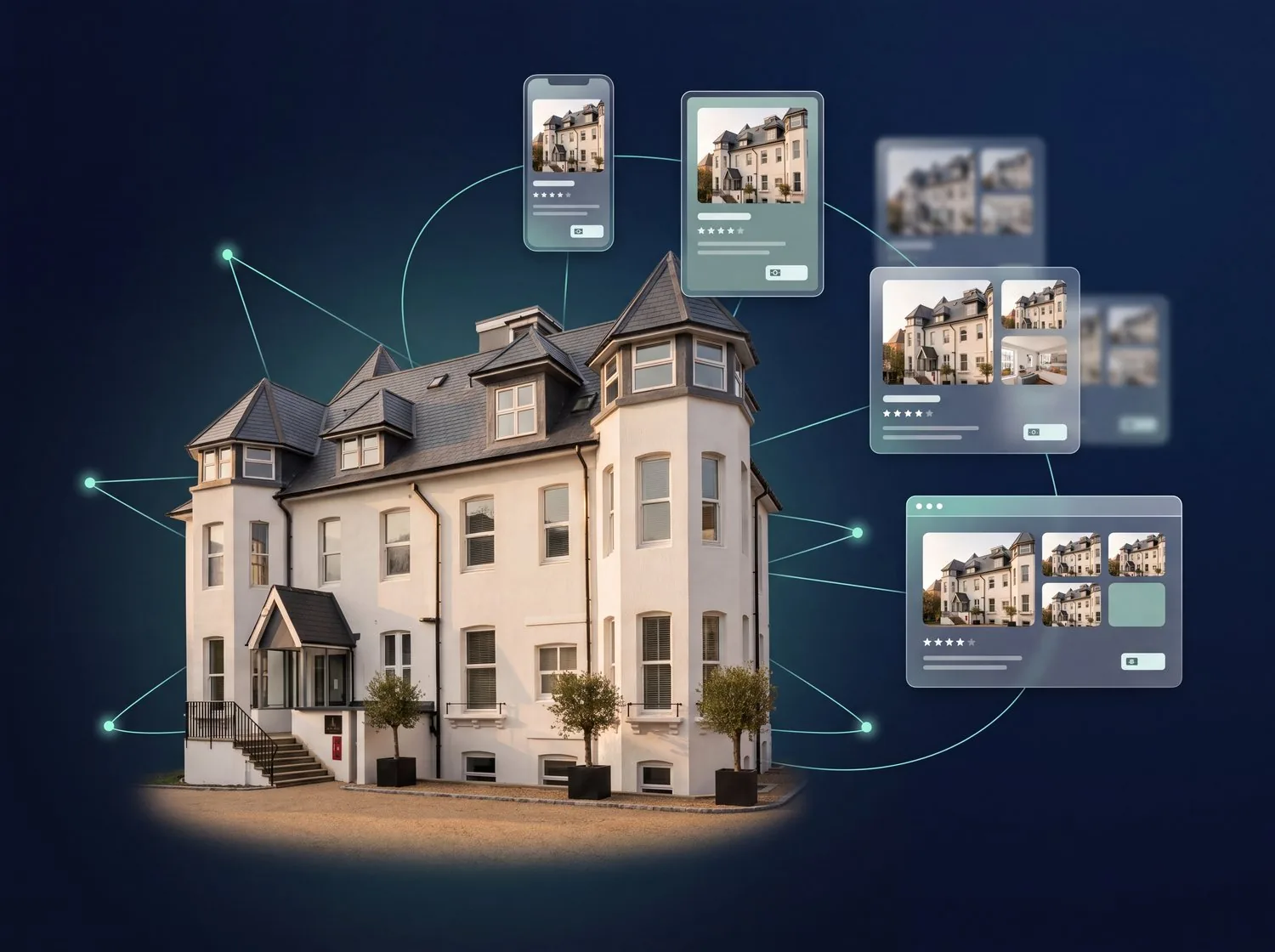
The nightly rate is the biggest lever most owners never pull
Rates that move with school holidays, bank holidays, the Air Festival, the BIC calendar, the weather and the flat two doors down. Not a number you picked in March and forgot.
Most holiday lets here are priced once. The owner picks a number in March, decides it feels about
right, and the calendar runs on it until something forces a change. It loses money twice, quietly
both times.
In August the rate is too cheap. The town is full, families booked their week back in January, and
a flat that would have sold at a strong rate goes at the March number. It books instantly, which
feels like success. It is the sound of money walking out.
In February the same rate is too dear. Demand thins and the calendar fills with empty nights. An
empty Tuesday earns nothing and cannot be sold later: the stock perishes daily, as it does in a
hotel. Everything else on our services page protects the rate. This page
is about setting it.
Demand signals
What actually moves the price in Bournemouth and Dorset
A rate is a guess unless you can see what drives it. Eight things move the number here, and they
rarely move together.
School holidays. The spine of the year. Half-term and the summer break turn a Boscombe
two-bed into a different product.
Bank holidays. And the shoulder nights either side. Owners price the Monday and forget
the Thursday.
The Bournemouth Air Festival. That weekend behaves like a separate town. Price it twelve
weeks out and you are ahead of demand, not chasing it.
Conferences at the BIC. Midweek business demand, a different guest, a shorter stay.
Weather. A good forecast ten days out lifts last-minute search along the coast. No
spreadsheet predicts it.
Day of week. A Saturday and a Tuesday should never carry the same price.
Lead time. The right price sixteen weeks out is not the right price six days out.
Competitor supply. Your real ceiling: how many comparable properties are still free that
night within a mile, and at what price.
You can only read that if you see demand across several channels at once, which is why pricing and
marketing and distribution are one job, not
two. Geography counts too: Sandbanks holds its rate while the coast around it discounts, so
Poole holiday lets sit on a different curve to
Winton.
The craft
Discounting is not pricing
Discounting is cutting the number and hoping. Pricing is deciding what one night is worth to one
guest at a given lead time, then holding that line. Most of the work sits in the rules around the
headline rate.
Minimum stays. A three-night minimum in August stops you paying for a changeover to earn
one night. The same rule in November is a wall across your own front door. Tighten in peak, loosen
out of season, loosen again as a date closes in.
Gap nights. A guest leaves on Sunday, the next arrives on Wednesday, and two nights sit
there that nobody is searching for. They are worth whatever somebody will pay, because the
alternative is nothing. Drop the minimum stay to fit the hole and price it to move. Cheapest
revenue in the business, and it goes unclaimed.
Early-bird and last-minute. One sells certainty cheaply, months before you know what the
date is worth. The other sells stock that expires at midnight. Both work with a rule behind them.
Neither should harden into a permanent cut to the standard rate.
The arithmetic
RevPAR, not rate, is the number that matters
Push the rate and you sell fewer nights. Cut it and you sell more, for less. The figure that
settles the argument is revenue per available night: rate multiplied by the share of nights that
sell.
Take our estimator's indicative model, a published model and not a measured result: a base nightly
rate by size, a location multiplier, then an occupancy assumption of 68% for a well-distributed,
actively priced property against 47% for one on a single channel at a static rate. On it, a
central Bournemouth two-bed lands near £156, the £142 base carrying the 1.10 multiplier.
Now the trade-off. At £156 and 68% occupancy the model earns about £106 per available night. Push
to £180, fill half the calendar, and it earns £90: the higher rate makes less money. Drop to £120
to fill 85% of the year and you are near £102, hosting more guests and wearing the sofa out faster
for slightly less.
That is arithmetic on a model, not a promise about your property. Revenue management is the search
for the top of that curve. Run the sums for your own place on the
holiday let management page, then watch the real
numbers land in the owner portal.
What you get
Inside the 15%, and not inside the 5%
Dynamic pricing and calendar management sit inside the
Fully Managed plan at 15% of booking revenue.
No separate revenue-management fee, no software subscription billed on to you. We set the opening
rate calendar, move minimum stays with the season, price known events early and work the gap
nights. Our fee is a share of what the property earns, so a rate left too low costs us as well as
you.
The other door is different. The
List on Flexiestays plan at 5% does not
include this service. It is distribution and nothing else: your property joins the
Flexiestays booking platform and its guest audience,
and you carry on setting your own rates. Plenty of owners price well and simply want more shop
windows. They should not hire a manager. If you are weighing the two, start with
managed versus self-managed Airbnb and the
fees page.
The industry oversells this, so be clear. Dynamic pricing is not magic, and a badly presented
property cannot be priced out of trouble. If the first three photographs do not earn the click, no
rate saves the listing: that is a job for
listing and photography. If the kitchen
photographs like a rental, the furniture sets your ceiling, not the algorithm, and that is a job
for our
interior design and furnishing partners.
Pricing finds the best number a property can command. It cannot invent one it has not earned.
Pricing
Priced by us, or priced by you
Revenue management is part of the fully managed plan. If you would rather keep your own hand on the rate, take the listing plan and the distribution that comes with it.
Recommended for this pageFully Managed
15 %
of booking revenue
Hand it over. We run the whole thing.
Who it suits. Owners who want the income without the work, and operators who want a single team running the building.
Everything in List on Flexiestays, included
Listing, photography and copy across every major channel
Dynamic pricing and calendar management
24/7 guest communication and check-in
Cleaning and linen coordinated through vetted partners
The Flexiestays listing is included inside the fully managed fee. It is not charged twice, and
it is not reserved for managed clients: anyone can take the 5% listing on its own.
Compare both plans in full.
FAQs
Dynamic pricing, answered
What owners ask before they hand over the rate calendar.
No, and the two often pull in opposite directions. Discounting means cutting the number and hoping. Pricing means deciding what one specific night is worth to one specific guest at a given lead time, then holding that line. Half the job in Bournemouth is pushing rates up: an August Saturday, a bank-holiday weekend, the Air Festival weekend. If a property books out instantly at a flat rate, it was underpriced, not popular.
You set the floor. We will not sell your property below a rate you are unhappy with, and every night, rule and change is visible in the owner portal. What we ask for is the freedom to move the rate between that floor and whatever the market will bear on the day. An owner who has to approve each change by email is, in practice, back on a fixed rate.
No. The 5% plan is distribution and nothing else: your property joins the Flexiestays booking platform and its guest audience, and you keep control of pricing, guests and standards exactly as you do now. Dynamic pricing and calendar management sit inside the 15% fully managed plan, which includes the Flexiestays listing at no extra cost.
The specific software in the stack is {{TODO: confirm with FSM}}. The honest answer is that the tool matters less than the person reading it. Pricing engines are good at seasonality and lead time, and poor at knowing that a conference at the BIC has just filled the town midweek, or that your building has scaffolding on it. We use software for the pattern and a local team for the exception.
The far calendar and the near calendar are different jobs. Twelve months out we set an opening position by season, school holidays and known events, because families book August in January and much of the summer is won before it starts. Inside about three weeks the question changes: the night is perishable stock, and the job is to sell it without giving it away. Both windows are looked at continuously, not once a quarter.
Keep reading
The services around the rate
Pricing does not work alone. These are the parts of the operation it leans on.